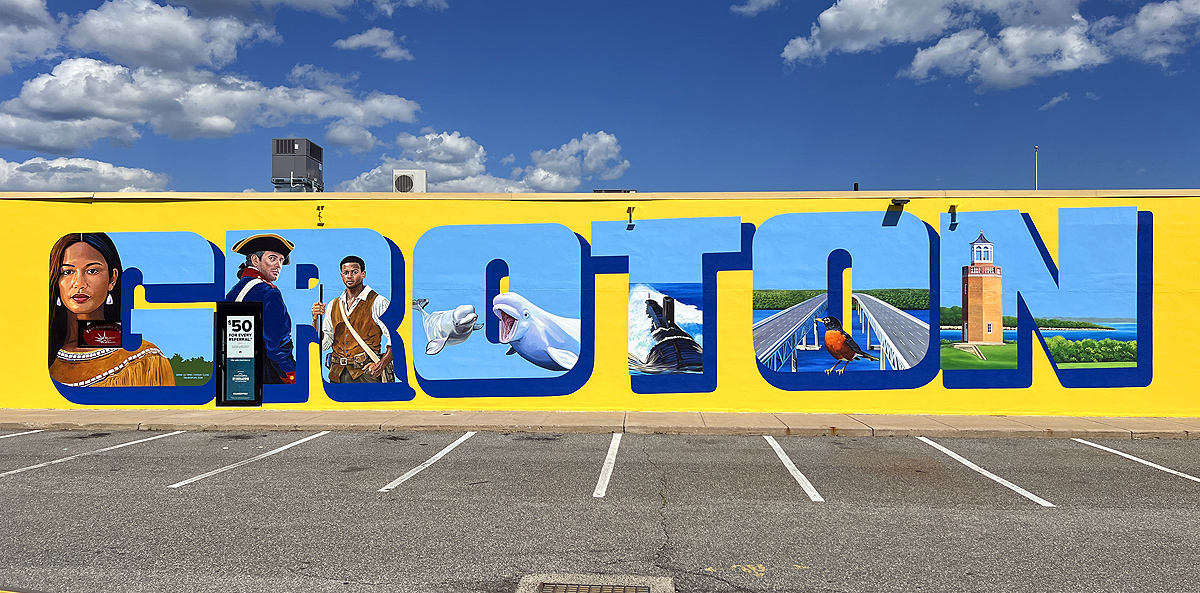
Groton Mural, 85′ x 15′, 2026
Groton Shoppers Mart, Groton, Connecticut
Charles C. Clear III & Bonnie Lee Turner
This large-scale postcard-style mural celebrates the rich history, natural beauty, and vibrant spirit of Groton, Connecticut.
In 2025, the new owners of the Groton Shoppers Mart – The Sigmund Companies – issued a national Call for Artists, inviting muralists from across the country to submit proposals for a public artwork that would “celebrate and represent the spirit, history, and diversity of the community of Groton, Connecticut.”
We designed a postcard-style mural inspired by the community’s remarkable history and submitted our proposal in July 2025. Shortly afterward, we received the exciting news that our design had been selected. Although scheduling prevented the mural from being painted that year, we returned in the spring of 2026 to bring the project to life.
For the mural, we chose an extra-wide typeface that allowed each letter to become its own miniature canvas, providing ample space to tell Groton’s story. The bold yellow background, accented with light and dark blue lettering, reflects the colors of the Groton City Seal. We also designed the word GROTON so that it gradually rises from left to right, symbolizing both the rising tide and a community that continues to move forward with optimism and pride.
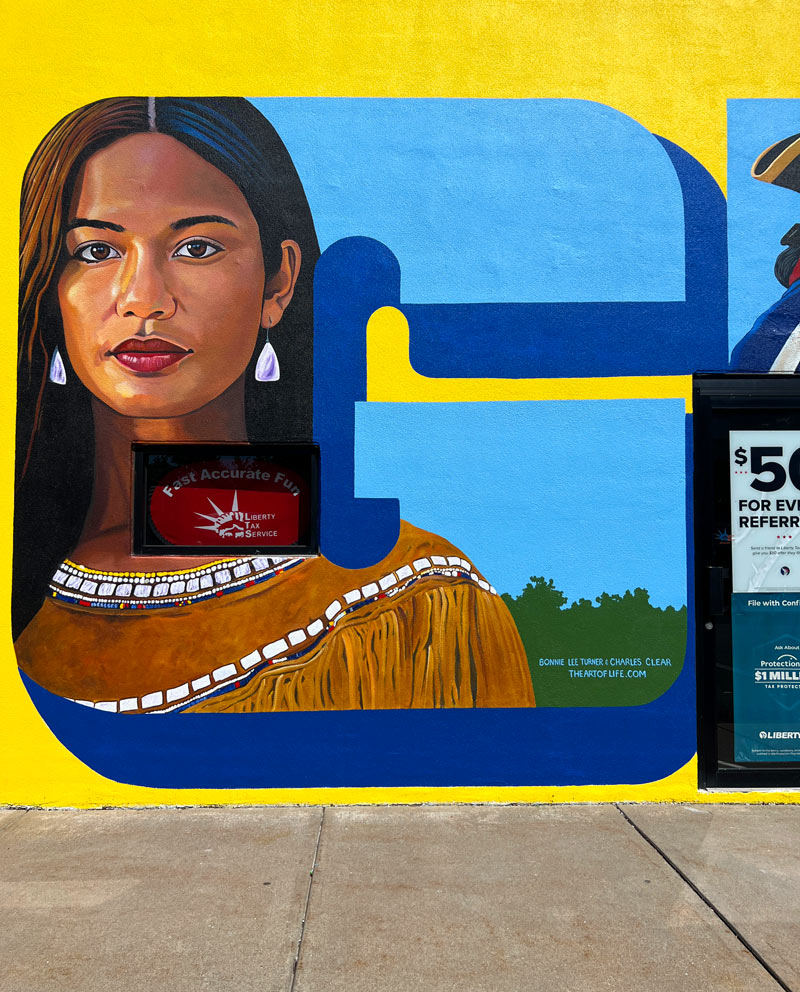
The Letter G — The Pequot People
The mural begins with a twelve-foot-tall portrait of a Pequot woman wearing traditional wampum earrings and a deerskin dress adorned with fringe.
The Pequots—whose name is often translated as “The Fox People”—are the Indigenous people who lived throughout this region for countless generations before English settlers arrived. Today, the Mashantucket Pequot Tribal Nation continues that legacy and owns and operates Foxwoods Resort Casino, one of the largest casino resorts in the world.
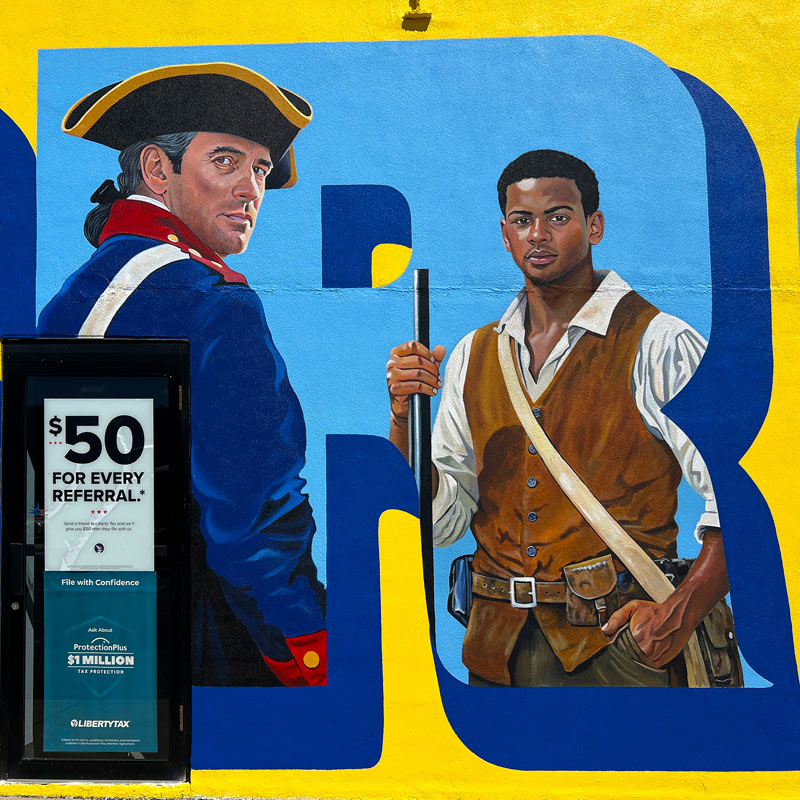
The Letter R — Heroes of Fort Griswold
The letter R honors two heroes of the Battle of Fort Griswold: Colonel William Ledyard and Lambert Latham.
Less than a mile from this mural stands Fort Griswold, overlooking the Thames River. During the American Revolution, the fort was commanded by forty-two-year-old Colonel William Ledyard.
On September 6, 1781, British forces under the command of the traitor Benedict Arnold launched coordinated attacks on Fort Trumbull in New London and Fort Griswold in Groton.
Although outnumbered by nearly ten to one, the defenders of Fort Griswold resisted with extraordinary courage. After exhausting their ammunition and suffering heavy casualties, they were finally overwhelmed by hundreds of British soldiers who stormed the fort.
According to the best-known account, British officer Major Stephen Bromfield demanded, “Who commands this fort?”
Colonel Ledyard calmly replied,
“I once did. You do now.”
Ledyard then unbuckled his sword and offered it to Bromfield, hilt first, in a gesture of surrender. Instead of accepting it honorably, Bromfield seized the sword and drove it into Ledyard’s chest, killing him.
Witnessing the death of his commander, the young defender Lambert Latham is said to have avenged Ledyard by killing Major Bromfield before he himself was fatally bayoneted by British soldiers.
Historians continue to debate certain details of these events, making it impossible to know exactly how every moment unfolded. What is beyond dispute is that both Colonel William Ledyard and Lambert Latham fought bravely during the Battle of Groton Heights and gave their lives defending Fort Griswold on September 6, 1781. Their sacrifice remains one of the most enduring stories of courage and patriotism from the American Revolution:
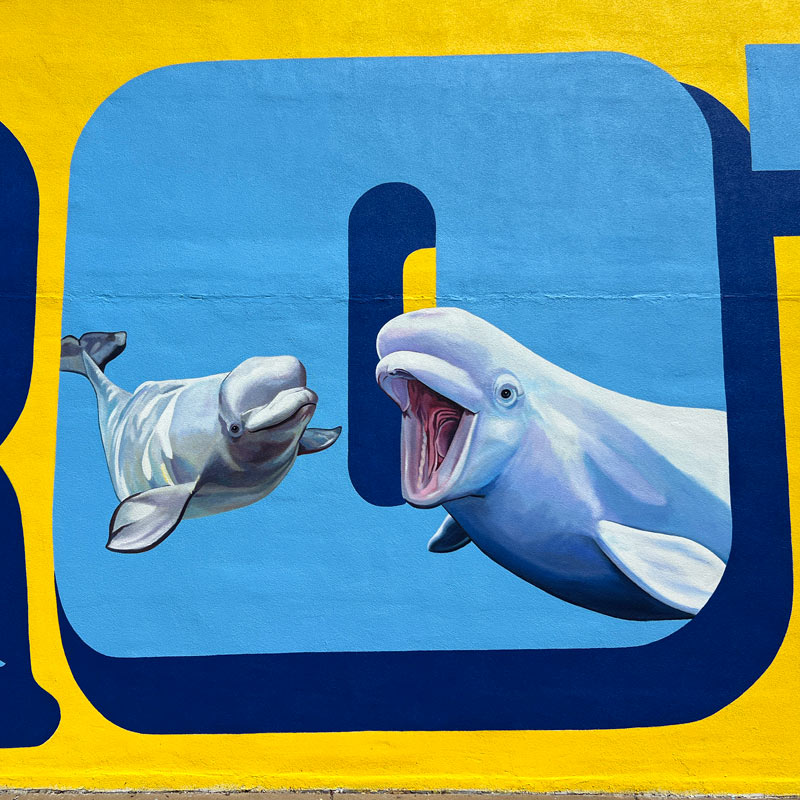
The Letter O — Beluga Whales
The first O features two playful beluga whales from the nearby Mystic Aquarium.
Belugas are among the world’s most intelligent and social marine mammals, known for their expressive faces, playful personalities, and remarkable vocalizations. Mystic Aquarium is home to New England’s only beluga whales, making them one of the region’s most beloved attractions.
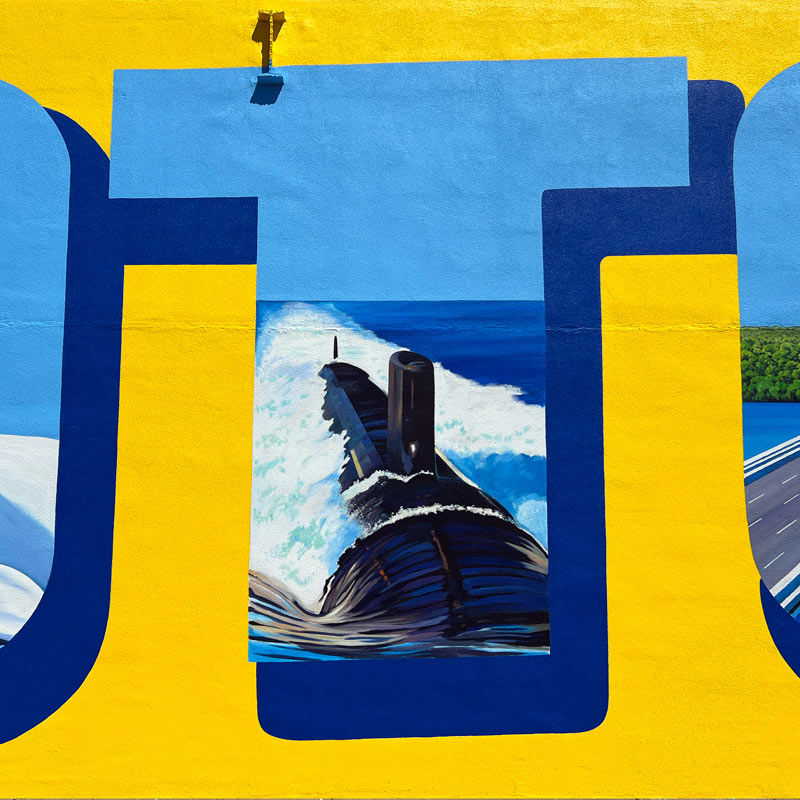
The Letter T — USS Nautilus
Groton is proudly known as the Submarine Capital of the World, so including a submarine in the mural was essential.
The submarine depicted in the letter T is not just any vessel—it is the historic USS Nautilus, the world’s first nuclear-powered submarine. On August 3, 1958, Nautilus made history by becoming the first submarine ever to complete a submerged voyage beneath the North Pole.
After nearly twenty-five years of service, Nautilus was decommissioned in 1980. Today, she is preserved as a National Historic Landmark at the Submarine Force Library & Museum in Groton, where visitors can tour this remarkable piece of naval history.
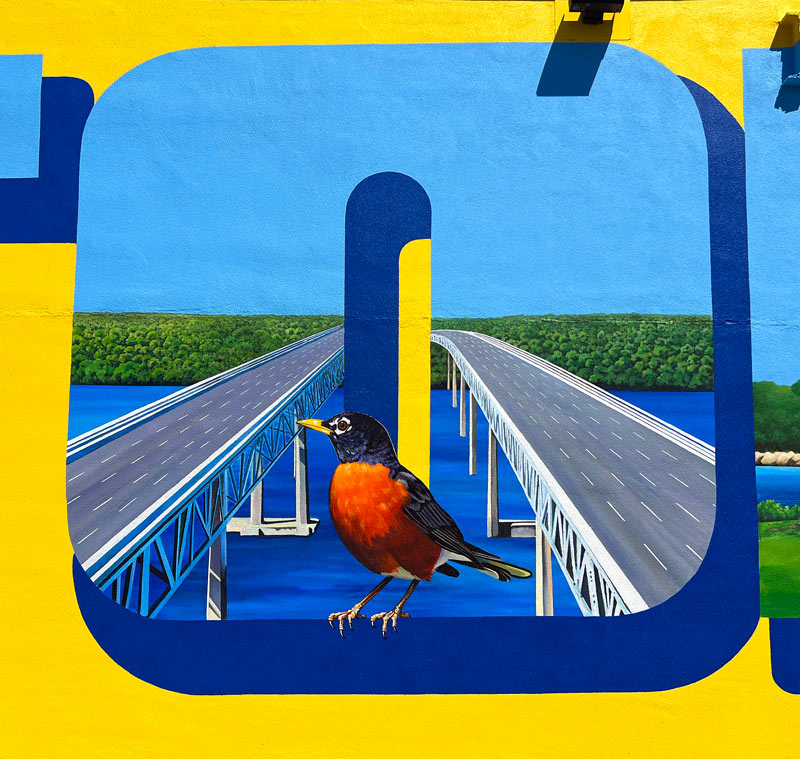
The Letter O — Gold Star Memorial Bridge
The second O showcases Connecticut’s official state bird—the American Robin—painted on a grand scale as it perches in the foreground.
Stretching across the background is the iconic Gold Star Memorial Bridge, an eleven-lane bridge spanning the Thames River and connecting Groton with neighboring New London.
While painting the mural, many local residents joked about the bridge’s traffic. We decided to leave the roadway completely empty—we figured everyone would enjoy seeing eleven lanes of smooth sailing for a change!
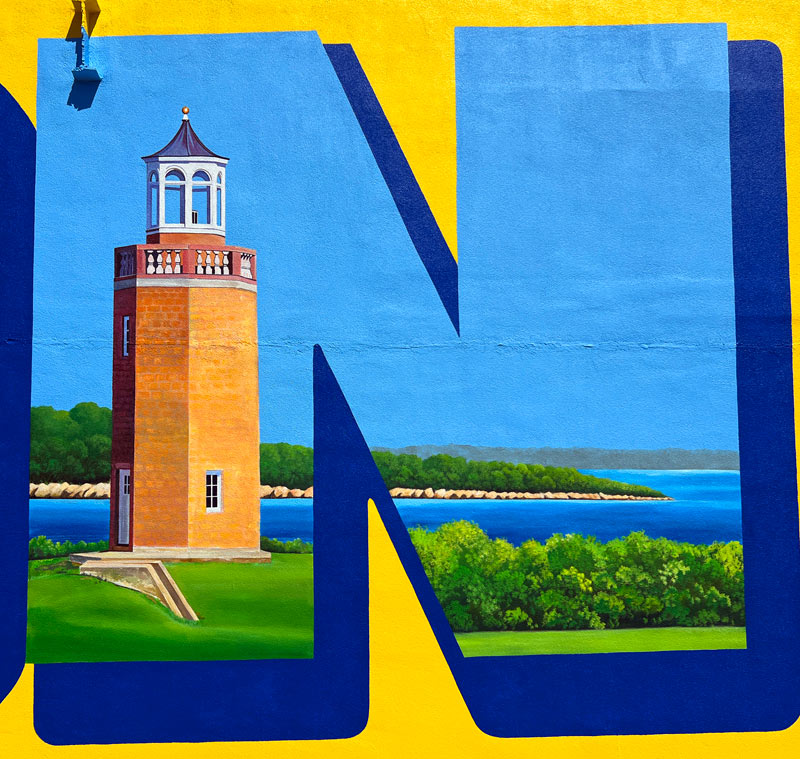
The Letter N — Avery Point Lighthouse
The mural concludes with the historic Avery Point Lighthouse, located on the beautiful University of Connecticut Avery Point campus overlooking Long Island Sound.
Originally constructed in 1943, the lighthouse has become one of Groton’s most recognizable landmarks and a symbol of the city’s enduring maritime heritage.
Our Experience
Painting this mural was a privilege from beginning to end.
Beyond learning about Groton’s fascinating history, remarkable people, and beautiful landmarks, what we’ll remember most is the warmth and kindness of the community itself. Throughout the project, countless people stopped to watch our progress, share stories, offer encouragement, and make us feel welcome.
Groton has no shortage of historic sites, natural beauty, and world-famous attractions—but after spending several weeks here, we’ve come to believe its greatest treasure is its people.
Thank you, Groton, for making us feel at home!
Charles & Bonnie
The Art Of Life